How Hair Tissue Mineral Analysis helped guide a wider nutritional investigation.
The background
A woman in her late 40s came to us with a complex health history, including rheumatoid arthritis, significant joint pain, fatigue and thyroid problems. She had also undergone a hysterectomy and was taking hormone replacement therapy.
Her symptoms were affecting her everyday life, particularly her ability to stay active and enjoy an activity that she loved.
What did her hair test reveal?
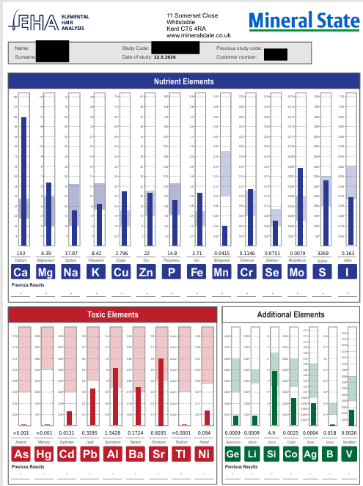
We started with Hair Tissue Mineral Analysis (HTMA), which identified several notable mineral patterns:
- High calcium and magnesium levels in the hair.
- Low sodium-to-potassium (Na/K) ratio, an important relationship considered in HTMA.
- Low sodium-to-magnesium (Na/Mg) ratio, another significant finding.
- Elevated phosphorus, alongside other mineral imbalances.
Rather than looking at individual minerals in isolation, we considered the relationships between them and how these findings fitted into her wider health picture.
Putting the pieces of the puzzle together
HTMA is often our starting point, but sometimes additional testing helps us understand a client’s nutritional needs more fully.
In this case, we also carried out:
Comprehensive stool testing, which identified elevated Clostridia bacteria and low levels of beneficial short-chain fatty acids. These findings helped guide a targeted approach to supporting her gut microbiome.
Genetic testing, which provided additional information about pathways involved in inflammation and metabolic health, helping us further personalise her nutritional programme.
Together with her medical history, symptoms and lifestyle, these investigations provided a broader picture than any single test could offer.
Our personalised approach
We developed a gradual programme incorporating targeted nutritional supplements, improvements to her diet, gut health support and lifestyle strategies.
Particular attention was given to establishing regular protein-rich breakfasts, improving meal quality, supporting mineral balance and introducing manageable movement and nervous system relaxation techniques.
The progress
Over the following months, she established healthier eating habits, improved her breakfast and lunchtime routines and initially experienced better sleep.
She also began incorporating Pilates, walking and rebounder exercise into her routine.
Most encouragingly, she was able to pursue opportunities to return to the activity she loved — an important personal goal.
Although she continues to manage her rheumatoid arthritis and other health challenges, these changes have helped her build more supportive daily routines.
Because good nutritional therapy isn’t just about interpreting test results. It’s about understanding the whole person.
This anonymised case describes one client’s experience. HTMA and other nutritional investigations do not diagnose or treat rheumatoid arthritis and do not replace conventional medical care.